
How to Teach Beginning Sounds
Order of Letters
In the Spanish language, it is imperative to start with the vocales (A-E-I-O-U) After these letters have been explicitly taught, then we move on to the consonantes.
Below you will see the specific order in which each letter is taught. How many letters per week will really depend on your child. Some families do a single letter per week, while others do a new letter each day. Each child is different, and this can be modified for their needs.
| Sets | Letters |
|---|---|
| Set 1 | O, A, I, U, E |
| Set 2 | M, P, S, L |
| Set 3 | T, D, R, C, C |
| Set 4 | N, F, B, J |
| Set 5 | G, G, CH, Ñ, V, Ll |
| Set 6 | Q, Z, H, Y, X |
| Set 7 | K, W |
Teaching the Target Sound
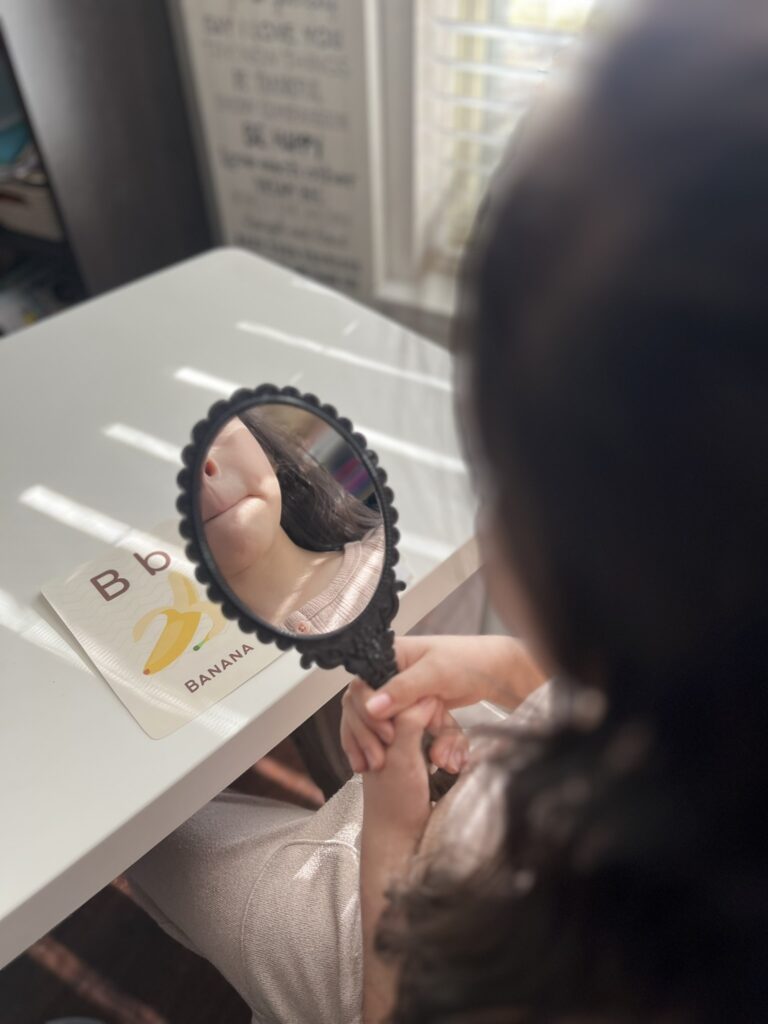
When teaching sounds, mouth placement is critical for kids to see be modeled and practice. Exaggeration is key for children to start hearing the correct sound and to have correct mouth, tongue and teeth placement when practicing these sounds. This is how I begin:
Connect to World

Engaging Activities
One of my favorite activities that I do with my toddler when introducing a new letter sound is “House Scavenger Hunt“.
We look for items around the house that begin with our target letter sound. We then bring them together, say their name and reiterate the beginning sound of each item. This is so fun, engaging and allows the child to have agency over their learning.

Helpful Tips for Success
- Be Patient and Encouraging Every child learns at their own pace. Celebrate small successes and encourage continued exploration.
- Keep Sessions Short and Engaging Young children have short attention spans. Aim for short, interactive sessions of 10–15 minutes.
- Incorporate Movement Incorporate actions and body movements to keep children actively engaged. For example, make animal sounds and movements while learning about different sounds.
- Use Technology Wisely Educational apps and videos can supplement learning but should not replace hands-on activities.
For Visual Learners, Watch our Video!
Visit our Shop for Materials


