
How to Teach Letter Formation
Finger Write
Finger writing helps children develop muscle memory, fine motor skills, and letter recognition by engaging multiple senses. Tracing letters in the air or on textured surfaces strengthens hand muscles and reinforces letter shapes in a fun, low-pressure way.
- Trace with Finger- Using the alphabet cards, the child uses their finger to trace the shape of the letter.
- Write on hand – Practicing letter shape on their own hands.
- Air Write – Practicing letter shape in the air with finger or magic pointer.
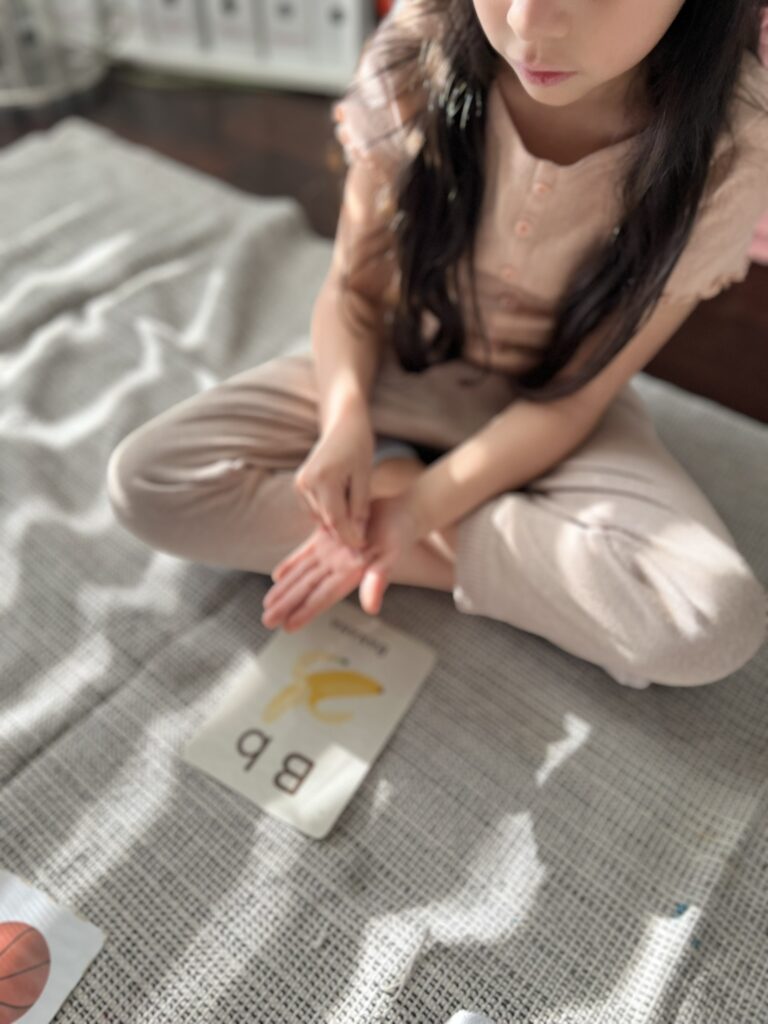
Sensory Practice
When children trace letters on textured surfaces (like sand, salt, or shaving cream), they develop muscle memory, making it easier to write with a pencil later on. This multisensory approach boosts confidence, making writing feel natural before introducing a pencil.

- Sand Write – Though it can be messy, children are excited to use sand to learn their letters.
- Shaving Cream – I love using shaving cream as it is easy to clean. You can use food coloring to make it fun!
- Paint – One way that I love to use paint is by putting some in a ZipLock bag. This allows me to have it ready and use it multiple times.
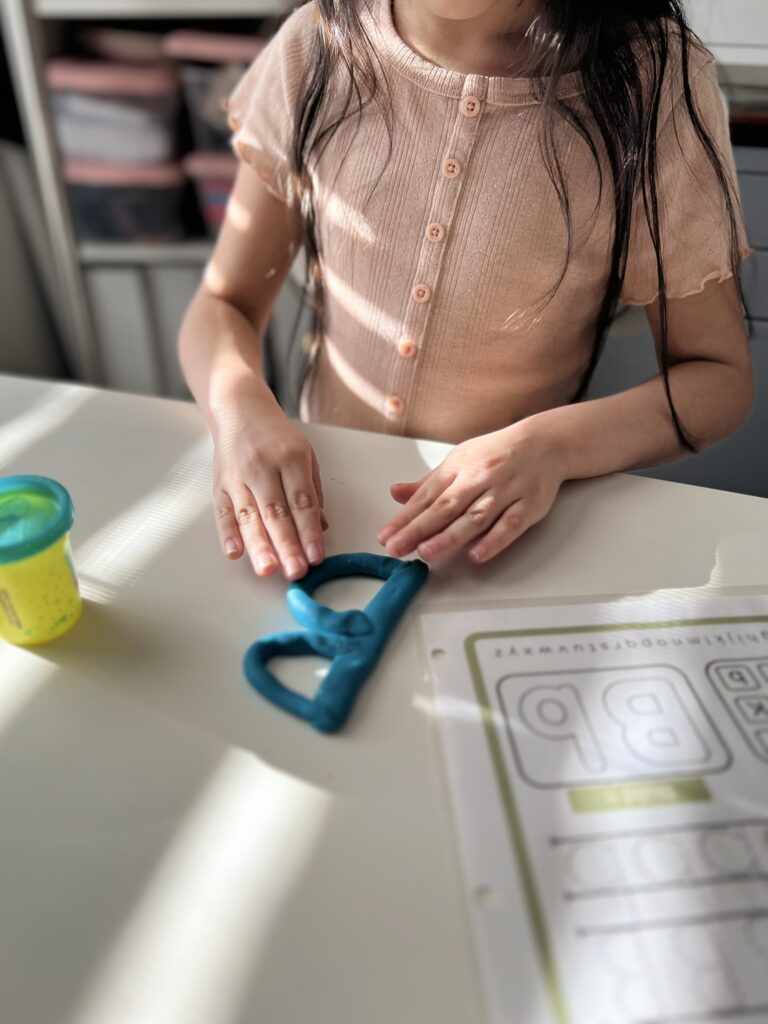
Playdoh Play
Making letters with playdough strengthens fine motor skills by engaging the small muscles in a child’s hands, improving their grip and control for writing. This fun, pressure-free activity also enhances letter recognition and keeps kids engaged in the learning process.
- Order of letter formation: When making letters with modeling clay, the order in which you form the letters is important. This is great it helping kids know how to form letters correctly.
Writing Mat
Once kids are ready to hold a pencil, tracing letters offers great practice in letter formation. Our reusable writing mats are simple, easy to use and are beautiful.
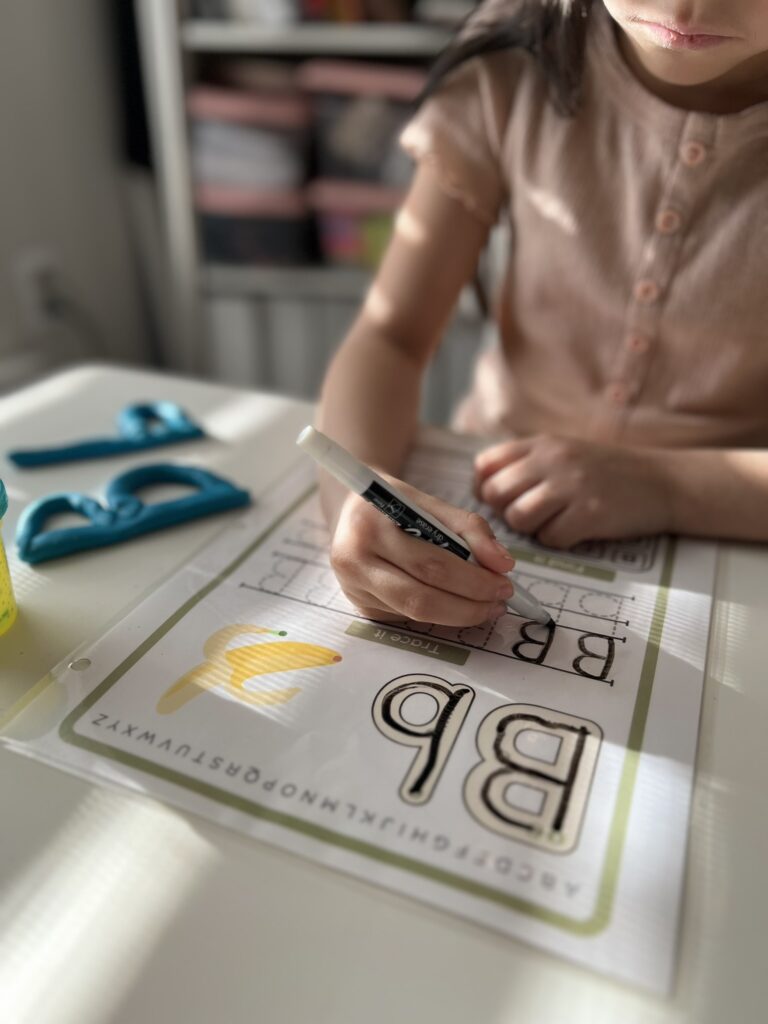
- Letter Trace – Our writing mats show the ordered steps to create a letter.
- Different Activities – From practicing, looking for the letter and building it, writing mats are engaging.
- Easy Print Out – Our writing mats can be printed and laminated to be used over and over.
Helpful Tips
- Demonstrate Slowly: Show how to form letters while naming each stroke aloud (e.g., “Start at the top and pull down”).
- Practice: Keep practice short (5–10 minutes) and positive.
- Encourage Pretend Play: Integrate letter writing into play, such as writing pretend grocery lists or letters to family members.
Learning to write letters is a process. Praise effort over perfection, and remember that every scribble is a step toward success.
This is the end of Etapa 1. Even when all letters have been explicitly taught, we still need to go back and review letters. When you feel that your child is ready to start putting sounds together to make syllables, it is important to note that practice will still be needed on prior letters learned.
Watch Video Here!
Visit our Shop for Materials


